
The seven sacraments are foundational to Catholic faith, offering grace through rituals. Rooted in scripture and tradition, they signify God’s presence and action in believers’ lives.
Historical Development of the Sevenfold Structure
The evolution of the seven sacraments wasn’t immediate; it unfolded over centuries. Early Church Fathers identified key rituals, drawing from scripture and apostolic tradition. Initially, baptism and Eucharist held prominence, gradually joined by confirmation, reconciliation, anointing of the sick, holy orders, and matrimony.
By the 3rd century, figures like Cyprian of Carthage discussed sacraments as visible signs of invisible grace. The Council of Trent (1545-1563) formally defined the seven sacraments, solidifying their structure in response to the Protestant Reformation. This codification wasn’t inventing new practices, but rather articulating existing beliefs and practices within a structured framework, ensuring continuity and clarity for the faithful.
Theological Foundations: Grace and Salvation
Central to understanding the sacraments is the concept of grace – God’s freely given, unearned favor. Sacraments aren’t merely symbolic; they effect what they signify, conveying God’s grace to recipients. This grace empowers believers to participate in divine life and progress towards salvation.
Catholic theology views salvation as a process, not a single event. Sacraments are integral to this journey, offering forgiveness, healing, and strengthening. They are outward signs instituted by Christ to give grace, acting as channels through which God’s love and mercy flow. Through sacramental encounters, believers are transformed and drawn closer to God’s eternal kingdom.
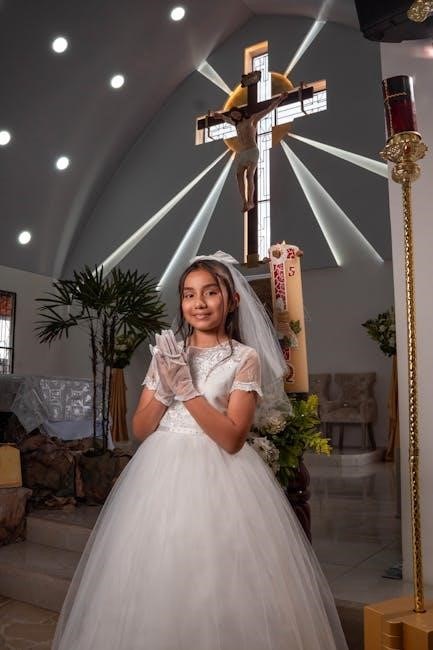
Sacraments of Initiation
Baptism, Confirmation, and Eucharist form the sacraments of initiation, laying the spiritual foundation for Christian life and belonging within the Church.
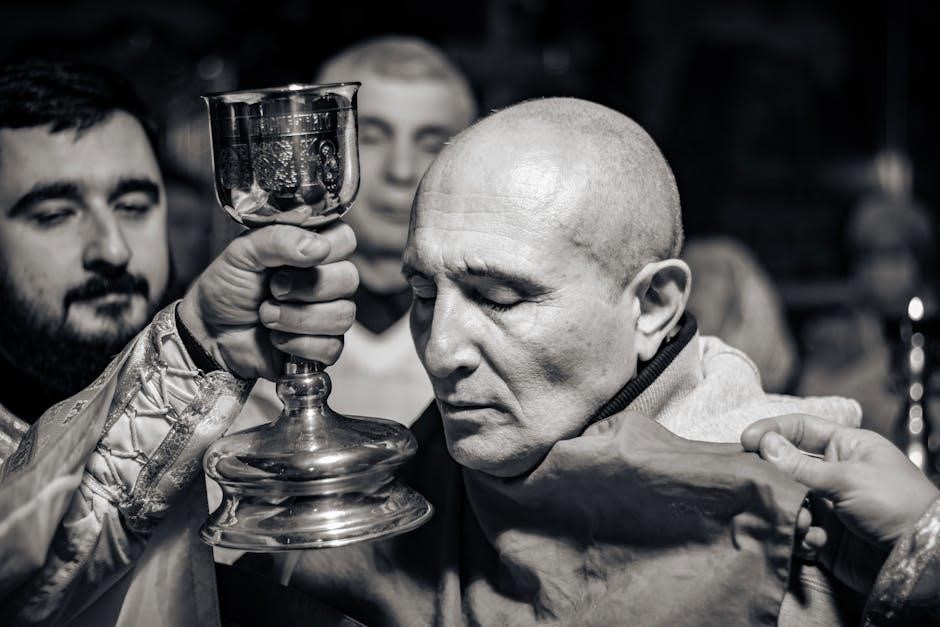
Baptism: Water, Faith, and New Life
Baptism is the first sacrament, a foundational rite signifying purification and rebirth in Christ. Scripturally, Jesus’ own baptism by John the Baptist (Matthew 3:16-17) demonstrates its importance, and the Great Commission (Matthew 28:19) commands believers to baptize.
The rite involves immersion in or pouring of water, accompanied by the invocation of the Holy Trinity. This symbolizes cleansing from original sin and entry into a new life in Christ. It’s not merely a physical act, but a profound spiritual transformation requiring faith. Lutherans emphasize the promise of eternal life connected to belief and baptism.
Baptism isn’t simply about receiving forgiveness; it’s about becoming a member of the Body of Christ, the Church, and receiving the Holy Spirit. It marks the beginning of a lifelong journey of faith and discipleship.
Biblical Basis for Baptism (Matthew 3:16-17, Matthew 28:19)
Matthew 3:16-17 recounts Jesus’ baptism by John, a pivotal moment demonstrating solidarity with humanity and fulfilling all righteousness. Though John preached repentance, Jesus’ baptism signifies a new beginning, a foreshadowing of his redemptive work. This act validates baptism as a necessary step for followers.
Matthew 28:19, part of the Great Commission, directly commands disciples to “baptize all nations in the name of the Father, and of the Son, and of the Holy Spirit.” This isn’t merely a suggestion, but a direct instruction, establishing baptism as central to Christian mission.
These verses, combined, provide a strong scriptural foundation for the practice of baptism, linking it to both Jesus’ example and the imperative to spread the Gospel.
The Rite of Baptism: Symbols and Meaning
Water is central, symbolizing purification and new life in Christ, washing away original sin. Faith, expressed by the parents and godparents, signifies belief in God’s saving grace and commitment to raising the baptized in the faith.
The white garment represents purity and newness, signifying the baptized’s entrance into a life of grace. A candle, lit from the Easter candle, symbolizes Christ as the light of the world and the baptized’s commitment to follow Him.
These elements aren’t merely ceremonial; they are outward signs of inward grace, powerfully conveying God’s love and the transformative power of baptism.
Confirmation: Strengthening with the Holy Spirit
Confirmation is a vital sacrament, deepening baptismal grace and sealing faith with the Holy Spirit’s gifts. It’s often described as a strengthening, empowering believers for witness and service.
Pentecost serves as the archetype, where the Holy Spirit descended upon the apostles (Acts 2:1-4), filling them with courage and enabling them to proclaim the Gospel. This event mirrors the individual’s reception of the Spirit in Confirmation.
Traditionally, the Bishop confers Confirmation, linking the individual more closely to the Church’s apostolic roots. Through the laying on of hands and anointing with chrism, the Holy Spirit is invoked, bestowing spiritual gifts.
Pentecost as the Archetype of Confirmation (Acts 2:1-4)
Pentecost, recounted in Acts 2:1-4, stands as the foundational event illuminating the sacrament of Confirmation. The descent of the Holy Spirit upon the apostles wasn’t merely a historical occurrence, but a paradigm for the grace bestowed upon believers today.
This pivotal moment witnessed a dramatic outpouring of the Spirit, manifested through a rushing wind, tongues of fire, and the ability to speak in other languages. It signified empowerment, courage, and a profound connection with God.
Confirmation, therefore, echoes Pentecost, aiming to replicate this spiritual awakening within individuals, strengthening their faith and equipping them for Christian life and witness.
The Role of the Bishop in Conferring Confirmation
Historically and theologically, the Bishop holds the primary role in administering the sacrament of Confirmation. This isn’t merely a matter of hierarchical structure, but a connection to the apostolic succession, tracing back to the original apostles who received the Holy Spirit at Pentecost.
The Bishop, as a direct successor of the apostles, acts as the visible sign of Christ and the Church, imparting the gift of the Holy Spirit through the laying on of hands and anointing with chrism.
This emphasizes the sacrament’s profound connection to the Church’s origins and ensures its validity and efficacy. Priests may administer Confirmation with the Bishop’s delegation.
Eucharist: The Source and Summit of Christian Life
The Eucharist, instituted by Christ at the Last Supper (Luke 22:19-20), is considered the “source and summit” of the Catholic faith. It’s not simply a remembrance of Christ’s sacrifice, but a re-presentation – a making present – of that sacrifice in an unbloody manner.
Through the miracle of Transubstantiation, the bread and wine truly become the Body and Blood of Jesus Christ, offering believers direct access to His divine life. Receiving the Eucharist nourishes faith and strengthens the bond with God.
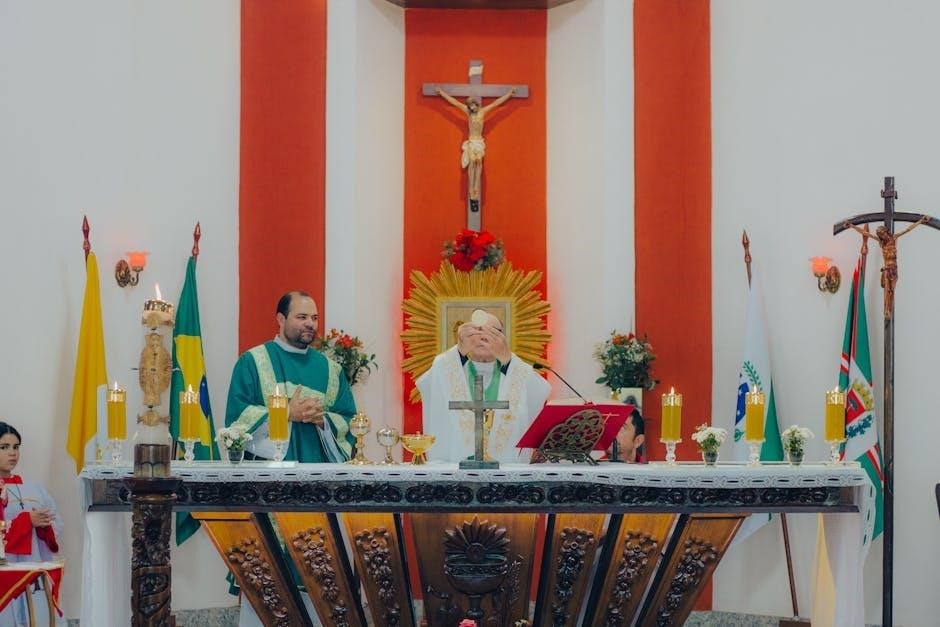
This sacred meal fosters unity among believers and provides grace for daily living, culminating in eternal life.
The Last Supper and the Institution of the Eucharist (Luke 22:19-20)
The Last Supper, recounted in Luke 22:19-20, marks the pivotal moment when Jesus instituted the Eucharist. Sharing a final meal with His apostles, He took bread, gave thanks, and broke it, declaring it His Body given for them. Similarly, He took a cup of wine, proclaiming it His Blood of the covenant, poured out for many for the forgiveness of sins.
This act wasn’t merely symbolic; it was a command to “do this in remembrance of me,” establishing a perpetual sacrifice. The Last Supper foreshadowed His impending death and resurrection, offering a pathway to eternal life through participation in His sacrifice.
Transubstantiation: Understanding Christ’s Presence
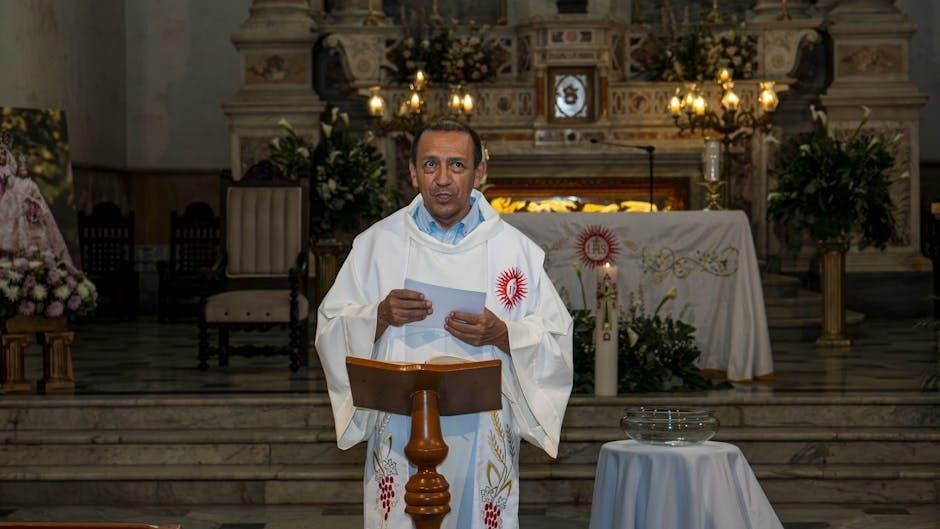
Transubstantiation is the Catholic doctrine explaining how Christ is truly present in the Eucharist. It affirms that during consecration, the substance of the bread and wine is changed into the body and blood of Christ, while the outward appearances (accidents) remain unchanged. This isn’t merely a symbolic presence, but a real, substantial transformation.
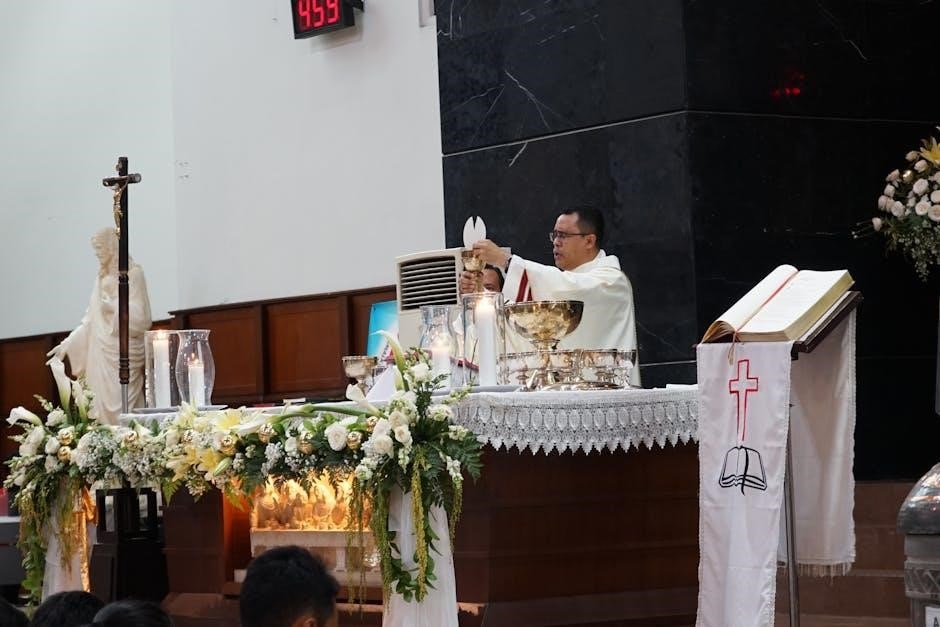
Catholics believe Jesus is truly present – body, blood, soul, and divinity – under the appearances of bread and wine. Receiving the Eucharist isn’t consuming symbols, but receiving Christ Himself, fostering a deeper union with God and growth in grace.
Sacraments of Healing
Sacraments of Healing, Reconciliation and Anointing of the Sick, offer spiritual and sometimes physical restoration through God’s grace and mercy to believers.
Reconciliation (Confession): Forgiveness and Restoration
Reconciliation, often called Confession, is a vital sacrament offering God’s boundless mercy and forgiveness to those who have strayed from His path. Rooted in biblical precedents demonstrating God’s consistent desire for restoration, this sacrament allows individuals to acknowledge their sins and receive absolution.
The process involves a sincere examination of conscience, followed by a humble confession of those sins to a priest. Through the priest’s authority, granted by Christ, absolution is offered, releasing the penitent from the guilt and effects of sin. Finally, the priest assigns a penance – a prayer, act of service, or sacrifice – to aid in healing and prevent future offenses. This sacrament isn’t merely about punishment; it’s about a renewed relationship with God and a path towards spiritual wholeness.
Biblical Roots of Reconciliation: God’s Mercy
The Bible overflows with examples of God’s unwavering mercy and desire for reconciliation with humanity. From the story of Adam and Eve’s disobedience in Genesis to the prophetic calls for repentance throughout the Old Testament, a consistent theme emerges: God actively seeks to restore broken relationships.
The New Testament powerfully demonstrates this through Jesus Christ’s ministry. He forgave sins, dined with outcasts, and offered redemption to all who believed. His parables, like the Prodigal Son (Luke 15:11-32), vividly illustrate God’s boundless compassion and willingness to welcome back those who return to Him with a contrite heart. This divine initiative forms the bedrock of the Sacrament of Reconciliation, emphasizing God’s proactive love and forgiveness.
The Process of Confession: Examination of Conscience, Confession, Absolution, Penance
The Sacrament of Reconciliation unfolds in a structured process designed to facilitate genuine conversion. It begins with an examination of conscience, a personal reflection on one’s actions in light of God’s law and the teachings of the Church. This honest self-assessment prepares the penitent for confession, where sins are acknowledged to a priest, acting as Christ’s minister.
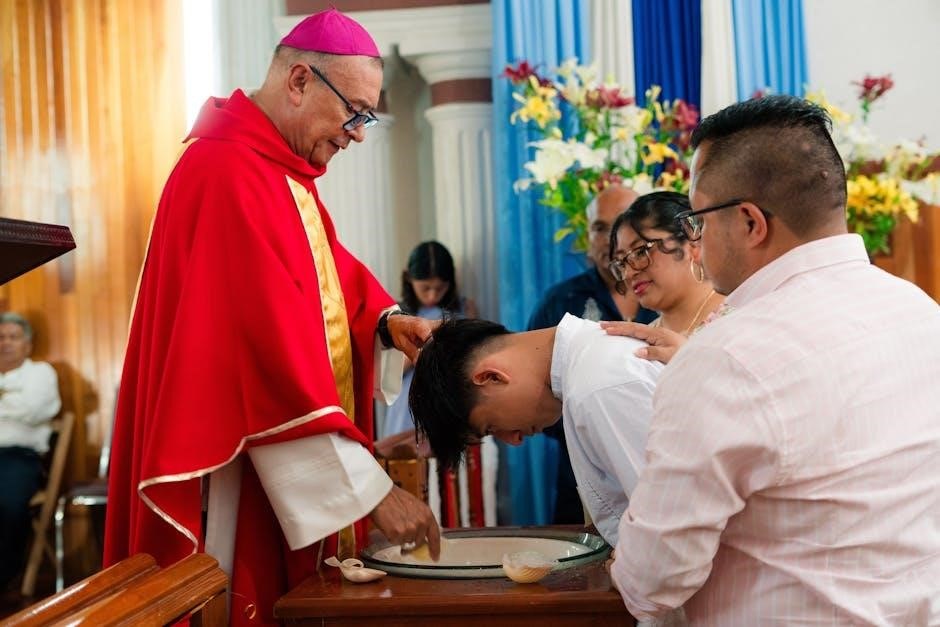
Following sincere confession, the priest offers absolution, imparting God’s forgiveness. Finally, the priest assigns penance – acts of prayer, service, or self-denial – to help heal the wounds of sin and foster spiritual growth. This structured process ensures a meaningful encounter with God’s mercy and a path toward restoration.
Anointing of the Sick: Spiritual and Physical Healing
This sacrament, formerly known as Extreme Unction, offers spiritual and sometimes physical healing to those suffering from serious illness, facing surgery, or nearing the end of life. Rooted in biblical precedents – James 5:14-16 encourages anointing with oil – it’s administered by a priest. The anointing with blessed oil signifies God’s loving presence and strengthening grace.
The effects are profound: forgiveness of sins (if the recipient hasn’t already received Reconciliation), a deeper union with Christ’s Passion, comfort, peace, courage to face suffering, and, potentially, physical healing. It’s not simply about curing illness, but about God’s grace empowering individuals during times of vulnerability.
Biblical Precedents for Anointing with Oil
The practice of anointing with oil has deep roots in the Bible, predating Christianity. In the Old Testament, oil was used for consecration – setting apart individuals for sacred duties – as seen with kings (1 Samuel 10:1) and priests (Exodus 30:22-33). It symbolized the Holy Spirit and divine favor.
The New Testament continues this tradition. Jesus himself sent his disciples to anoint the sick with oil (Mark 6:13), demonstrating its healing power. James 5:14-16 explicitly instructs believers to call for the elders to anoint the sick with oil and pray for them, highlighting its connection to faith and divine mercy. These passages establish a clear biblical basis for the sacrament.
The Effects of the Sacrament: Grace, Peace, and Courage
The Anointing of the Sick imparts several spiritual and even physical graces. Primarily, it confers a particular grace from Christ, strengthening the recipient facing illness, aging, or even imminent death. This grace unites them more closely to Christ’s Passion, offering comfort and peace amidst suffering.
Furthermore, the sacrament can lead to the forgiveness of sins if the individual has not received sacramental Reconciliation. It also restores spiritual strength, providing courage to confront illness with hope and faith. While not always resulting in physical cure, it offers acceptance of God’s will and prepares for eternal life.

Sacraments at the Service of Communion
These sacraments build community and express love. Matrimony and Holy Orders commit individuals to lifelong service and strengthen the Church’s bonds.
Matrimony: A Covenant of Love
Catholic understanding views marriage as a sacred sacrament, a covenant established by God and blessed by the Church. Biblical support for this sacrament is found throughout scripture, emphasizing the union of man and woman as a reflection of Christ’s relationship with the Church.
Unlike other sacraments, the ministers of this sacrament are the couple themselves, who mutually bestow the grace upon each other with the Church’s blessing. Essential elements include the free and informed consent of both parties, the intention to enter a lifelong and exclusive union open to procreation, and the witnessing of an authorized Church representative.
Marriage isn’t merely a social contract; it’s a spiritual bond signifying unconditional love, fidelity, and a commitment to building a family founded on faith. It’s a visible sign of God’s love and a source of grace for the couple and their community.
Marriage as a Sacrament: Biblical Support and Tradition
The sacramental nature of marriage finds deep roots in both Scripture and the unbroken tradition of the Church. Genesis highlights God creating man and woman for companionship and procreation, establishing the foundation for marriage. Jesus affirmed the sanctity of marriage in Matthew 19:6, emphasizing its indissoluble nature;
Early Church Fathers consistently viewed marriage as a blessed union, reflecting Christ’s love for the Church. Over centuries, the Church developed rituals and teachings to safeguard the sacredness of marriage, emphasizing its unique role in salvation history.
This tradition isn’t simply human invention but a development of the seed of truth planted by Christ and nurtured by the Holy Spirit, solidifying marriage’s place among the seven sacraments.
The Essential Elements of Catholic Marriage
Catholic marriage necessitates several key elements for validity. Firstly, it requires the free and informed consent of both parties, demonstrating a mutual desire to enter a lifelong covenant. This consent must be expressed before a properly authorized Church official and two witnesses.
Secondly, the couple must intend to embrace both the unitive (mutual self-giving love) and procreative (openness to children) aspects of marriage. These aren’t merely biological functions but integral expressions of love. Finally, the marriage must adhere to the Church’s canonical form, ensuring its legitimacy.
These elements safeguard the sacredness and permanence of the marital bond, reflecting God’s design for human relationships.
Holy Orders: Ordination and Sacred Ministry
Holy Orders is the sacrament through which the mission entrusted by Christ to the Apostles continues in the Church. It confers a sacred power to serve as Christ did, specifically to teach, govern, and sanctify the faithful. This isn’t merely a promotion but a transformative bestowal of grace.
Biblically, it finds roots in Jesus’s commissioning of the Apostles (Matthew 28:19-20). The sacrament is conferred by a bishop, signifying the unbroken line of apostolic succession. There are three degrees: deacon, priest, and bishop, each with distinct roles and responsibilities within the Church’s hierarchical structure.
It’s a call to selfless service and dedication to the Gospel.
Biblical Foundations for Holy Orders
The scriptural basis for Holy Orders rests primarily on Jesus’s actions and commands to the Apostles. Matthew 28:19-20 demonstrates Christ’s commissioning of them to go forth and make disciples, a clear delegation of authority. The Last Supper (Luke 22:19) also provides a foundation, with Jesus instructing them to “do this in remembrance of me,” establishing a continuing sacrificial priesthood.
Acts 6 highlights the early Church’s institution of deacons, demonstrating a recognized order of service. Furthermore, 1 Timothy 3 and Titus 1 outline qualifications for bishops and deacons, indicating established roles and expectations. These passages collectively support the development of a structured ministry.
The Three Degrees of Holy Orders: Deacon, Priest, Bishop
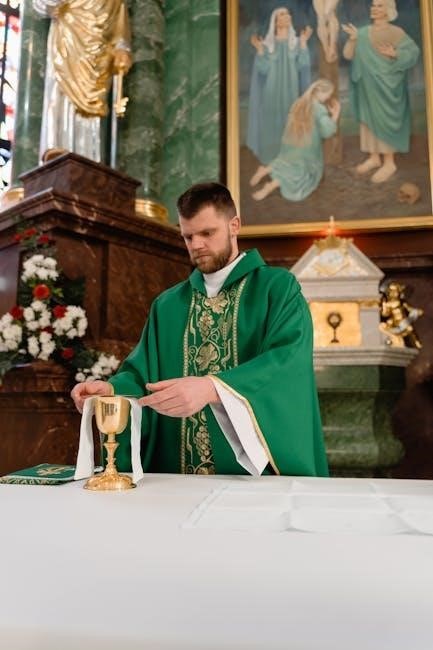
The Sacrament of Holy Orders is conferred through three distinct degrees: the diaconate, the presbyterate (priesthood), and the episcopate (bishopric). Deacons assist priests and bishops, often serving in liturgical roles and charitable works. Priests are ordained to preach the Gospel, administer sacraments—particularly Reconciliation and Eucharist—and shepherd a parish community.
Bishops, as successors to the Apostles, possess the fullness of Holy Orders. They oversee dioceses, ordain priests and deacons, and teach authoritatively. Each degree signifies a unique sharing in Christ’s priesthood, building upon the foundational grace received at ordination. These roles are vital for the Church’s mission.
Resources for Further Study
Explore official Church documents, recommended books, and websites for deeper understanding of sacramental theology and the seven sacraments’ profound significance.
Catholic Church Documents on the Sacraments
Numerous official documents from the Catholic Church delve into the rich theology of the seven sacraments. Sacrosanctum Concilium, the Second Vatican Council’s Constitution on the Sacred Liturgy, provides foundational principles. Catechism of the Catholic Church offers a comprehensive overview, explaining each sacrament’s meaning, effects, and proper disposition.
Papal encyclicals, like Ecclesia de Eucharistia by Pope John Paul II, focus specifically on the Eucharist. Documents from the Congregation for Divine Worship and the Discipline of the Sacraments clarify liturgical practices. These resources, often available as PDFs on the Vatican’s website, offer authoritative guidance for understanding and living out the sacramental life. They are essential for theological study and pastoral ministry, providing clarity on the Church’s teachings.
Recommended Books and Websites (PDF Resources)
For deeper exploration, several resources are invaluable. “The Seven Sacraments” by Fr. John A; Hardon, S.J., provides a classic theological treatment. Numerous publishers offer study guides and workbooks suitable for RCIA or adult education. Websites like the United States Conference of Catholic Bishops (USCCB) ([https://www.usccb.org/](https://www.usccb.org/)) offer downloadable PDFs on sacramental theology.
EWTN ([https://www.ewtn.com/](https://www.ewtn.com/)) provides articles and downloadable resources. Loyola Press offers excellent materials, including PDFs of catechetical lessons. Searching “Catholic sacraments PDF” yields numerous free resources, but verifying their source and theological accuracy is crucial. These resources enhance understanding of the sacraments’ profound significance.
Understanding Sacramental Theology: Key Concepts
Sacramental theology centers on the belief that sacraments are outward signs instituted by Christ to give grace. Key concepts include ‘ex opere operato’ – the efficacy of the sacrament itself, independent of the minister’s holiness. ‘Grace’ is God’s free and undeserved help for salvation. ‘Sacramental character’ is an indelible spiritual mark conferred by Baptism, Confirmation, and Holy Orders.
Understanding ‘transubstantiation’ is vital for the Eucharist, signifying a real change in substance. The concept of ‘participation’ highlights our sharing in Christ’s life through the sacraments. Studying these concepts, often found in downloadable PDFs, deepens appreciation for the sacraments’ power and purpose within the Catholic faith.